












Comment choisir un “cœur de puissance” pour les outils électriques ? Choisir le bon MOSFET pour le bricolage !
Alors que le marché des outils électriques continue d'évoluer, les consommateurs exigent une autonomie, des performances et une fiabilité accrues. Tout cela dépend du composant électronique “au niveau du cœur” des outils électriques : le MOSFET. Un MOSFET adapté permet non seulement d'augmenter la puissance et l'autonomie, mais aussi de prolonger la durée de vie de l'outil et de réduire les taux de défaillance.
Aujourd'hui, nous vous présentons un guide complet de sélection des MOSFET Goodwork pour les applications d'outillage électrique, vous guidant pas à pas dans le choix du bon composant !
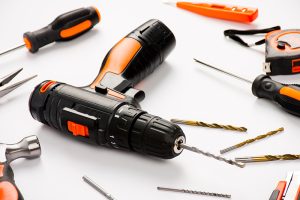
1. Quelle est la fonction exacte d'un MOSFET dans les outils électriques ?
1.1. Système d'entraînement du moteur (fonction principale)
Moteurs CC à balais : Utilise des circuits en pont en H pour le fonctionnement avant/arrière + un contrôle précis de la vitesse PWM, permettant de réaliser sans effort des tâches diverses telles que le vissage et le perçage.
Moteurs à courant continu sans balais : Le cœur de la commande du circuit triphasé à pont à six transistors, qui détermine la vitesse de réponse de l'outil et sa souplesse de fonctionnement.
Exigences de base : Faible résistance à l'enclenchement (Rds(on)), vitesse de commutation élevée, forte résistance aux surtensions.
1.2. Système de gestion de la batterie (BMS, Safety Guardian)
La protection contre les surtensions et les sous-tensions (empêche les surcharges et les surdécharges) et la protection contre les surintensités et les courts-circuits (déconnexion rapide du circuit en cas de défaillance) constituent la première ligne de défense de la sécurité de la batterie.
Exigences fondamentales : Faible consommation d'énergie statique, grande fiabilité, excellente cohérence.
1.3. Circuit de charge (assurance de la durée d'exécution)
Outils portatifs à faible consommation d'énergie : Les VDMOS haute tension suffisent.
Outils à haute puissance : Les MOSFET à super-jonction (SJ) réduisent considérablement les pertes et augmentent l'efficacité de la charge.
Recommandation de Goodwork : Les séries de MOSFET VDMOS et Cool MOS de Goodwork réduisent considérablement les pertes par conduction dans les circuits de charge, améliorant ainsi l'efficacité et prolongeant la durée de vie des batteries des outils électriques.
2 Processus de sélection en quatre étapes pour une adéquation précise et l'évitement des pièges
Le choix d'un MOSFET ne doit pas être basé sur l'intuition. Maîtrisez ces quatre paramètres fondamentaux pour relever sans effort les défis de la sélection !
2.1. Paramètres de tension : La sécurité d'abord, la garantie d'une marge adéquate
l Principe de sélection : Tension de claquage (Vds) ≥ 1,5-2 fois la tension de fonctionnement.
l Exemple : système de batterie de 12 V → Sélectionnez des modèles de 30 V ou plus.
lLogique clé : Résiste à la force électromotrice inverse et aux surtensions pendant les cycles de démarrage et d'arrêt du moteur afin d'éviter une panne de l'appareil.
2.2. Paramètres de courant : Fondement de la performance, prise en compte des courants de pointe
lCourant nominal (ID) : ≥5-10 fois le courant nominal du moteur.
lCourant de pointe (IDM) : ≥3 fois le courant nominal du moteur (pour gérer les surtensions instantanées au démarrage).
lExemple de calcul : perceuse 12V/500W → I = 500W/12V ≈ 42A → Sélectionner un courant nominal ≥100A.
2.3. Résistance à l'enclenchement (Rds (on)) : Clé de l'efficacité, plus elle est faible, mieux c'est
l Principe de sélection : Donner la priorité aux modèles de moins de 10mΩ ; recommander les modèles de moins de 5mΩ pour les outils de grande puissance.
l Aperçu comparatif : Un MOSFET de 4,5mΩ contre 10mΩ réduit la dissipation de puissance de 55% au même courant.
2.4. Choix de l'emballage : Considérations spatiales et thermiques
Recommandations de Goodwork : Goodwork propose diverses options de conditionnement, notamment TO-252 pour les outils compacts et SOP8, TO-220, TO-247 pour les outils de taille moyenne à grande, afin de garantir la gestion thermique et la fiabilité à tous les niveaux de puissance.
3. Critères de sélection pour les différents types d'outils électriques
Une sélection précise basée sur les conditions d'utilisation maximise les performances des différents outils électriques :
3.1. Perceuses/tournevis (les plus courants)
Conditions de fonctionnement : Tension 12-20V, puissance 500-1000W, courant de pointe 30-50A
Recommandation : MOSFET à canal N, tension de claquage 30-60V, courant nominal 60-100A, Rds(on) < 5mΩ, boîtier TO-252
3.2. Meuleuses d'angle/coupeuses (haute puissance)
Conditions de fonctionnement : Courant d'appel élevé, courant élevé soutenu, gestion thermique exigeante
Recommandation : Tension nominale de 60V+, courant nominal de 100A+, Rds(on) < 3mΩ, boîtier TO-220/TO-247 avec dissipation thermique améliorée.
3.3. Scies et marteaux électriques (charges d'impact)
Exigences principales : Résistance exceptionnelle aux chocs (ISU) + Faible Rds(on)
Recommandation : Produits dédiés de la série UIS élevée, supportant sans effort des conditions d'impact fréquentes
3.4. Clé électrique (couple élevé)
Conditions de fonctionnement : Courant instantané élevé, fonctionnement de courte durée à haute intensité
Recommandation : Modèles à faible Rds(on) et à haute densité de courant, équilibrant la fiabilité et la performance en rafale.
4. Guide pour éviter les pièges de la sélection
✅ Faites-le :
Assurer une marge de tension suffisante : Maintenir un déclassement supérieur à 50%
Contrôler l'augmentation de la température : Maintenir la température de jonction du MOSFET en dessous de 125°C
Adapter la puissance à l'emballage : Utiliser de petits boîtiers pour les faibles puissances, améliorer le refroidissement pour les fortes puissances.
Vérifier par des essais : Évaluer l'élévation de température et les formes d'onde de commutation pendant l'échantillonnage.
❌ À éviter :
S'appuyer sur une tension nominale “juste suffisante”.
Priorité au prix sur Rds(on)
Forcer les petits boîtiers à s'intégrer dans les applications de haute puissance
Ignorer la cohérence des lots
5.Recommandations pour la sélection de l'état solide : Efficace et fiable, une solution à guichet unique
Qu'il s'agisse de commandes de moteurs, de protection BMS ou de circuits de charge, les séries Cool MOS et VDMOS de Goodwork répondent précisément à vos besoins :
l Conception à faible Rds(on) pour réduire les pertes et augmenter l'efficacité ;
l Couverture complète de l'emballage pour diverses tailles d'outils ;
l Résistance robuste aux surtensions et haute fiabilité pour un fonctionnement stable dans des conditions extrêmes.
Choisissez les MOSFET de Goodwork Technology pour obtenir une puissance plus élevée, un temps de fonctionnement plus long et une durée de vie plus longue pour vos outils électriques !